- Why healthcare requires more engaging visual communication
- The importance of tone and delivery in healthcare videos
- How AI Makes Healthcare Communications Human Again
- From Medical Scripts to Patient Videos With Pippit
- Increased Availability of Educational Materials in Healthcare
- Decreased Workload and Enhanced Patient Engagement
- Patient Education’s Future is Visual, Interactive, and Driven by AI
- Conclusion: Establish Trust and Clarity Through Better Healthcare Videos
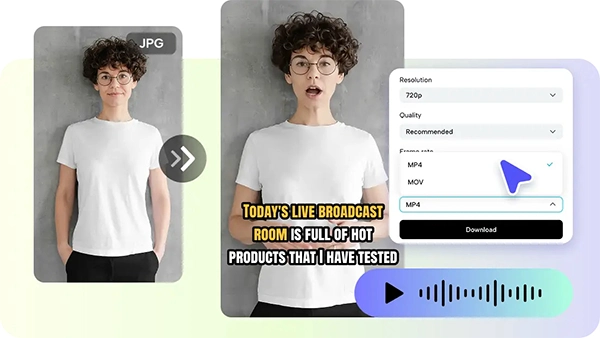
One key problem faced by any communication in healthcare is providing understandable and reliable content. The abundance of jargon, long explanations, and instructions tends to leave a negative impression on the patient. And here comes into play lip sync AI technology and its contribution to patient education.
By utilizing such a tool as Pippit, clinics, educators, and even health-oriented organizations can craft engaging explanatory videos based on useful information provided in a natural way with the help of lip-synching characters.
Such a solution not only makes the message more interesting but also contributes to understanding the content better. Patients become more responsible for their well-being because they have all the needed information.
Why healthcare requires more engaging visual communication
The healthcare sphere is known to contain numerous information blocks and concepts that could be confusing for anyone unfamiliar with the area. Even a set of easy instructions becomes hard to understand due to the use of medical terminology.
Video content solves the problem mentioned above, as it helps explain everything through visuals and audio parts.
A video agent can help structure your explainer videos in such a way that important information is delivered in an understandable and coherent order, helping viewers stay attentive and focused throughout.
This leads to better understanding, no confusion, and ultimately, positive patient outcomes.
The importance of tone and delivery in healthcare videos
Building trust is absolutely key when it comes to healthcare. People must feel assured by what they are told.
The first element that contributes to this feeling is the consistency of your messaging. Through the use of AI avatars, health organizations can maintain a consistent tone and approach throughout all videos, be it procedural guidance, advice about preventive measures, or aftercare.
Clarity of messaging is also extremely important. Videos should be concise, use clear and straightforward language, and include helpful visuals where necessary.
Combining these two elements, you can improve the relationship you have with your audience and establish yourself as an expert on the topic at hand.
How AI Makes Healthcare Communications Human Again
Tone of voice has always been one of the most significant stumbling blocks for healthcare communications.
By incorporating AI-based videos in patient communication, you can add a personal touch to the process by using an avatar to convey relevant information in a friendly and approachable tone.
Thanks to photo to video AI tools, any static image, illustration, or diagram will be able to come to life and tell its story in an engaging and understandable way.
You’ll have the opportunity to narrate patient stories without burdening them with too much information.
From Medical Scripts to Patient Videos With Pippit
So now you have learned about the importance of this kind of content – but what’s next? Here is how you can produce such videos with Pippit easily.
Step 1: Select an avatar
To begin, sign in to the Pippit software and choose “Video generator” from the sidebar. Within the Popular tools section, pick “Avatar Video” to view several AI avatars to choose from. Select an avatar that will suit your healthcare brand, whether it be professional, friendly, or appealing. The avatar will serve as your presenter for conveying medical information in a clear manner.
Step 2: Lip sync with your script
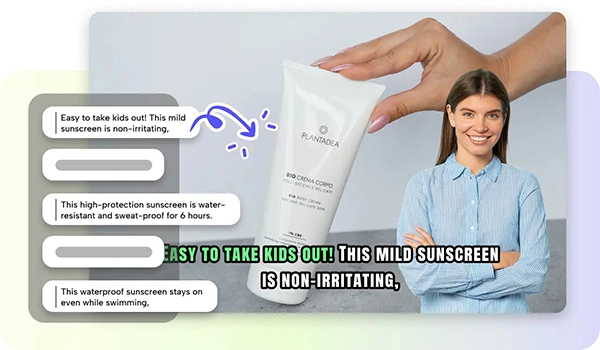
With all that done, head on to the avatar creation tools, where you can search for “Recommended avatars,” apply various filters, and finally choose the right avatar. Click “Edit script” once you have selected an avatar. Here you will write a medical presentation. Depending on what information needs to be conveyed, the avatar will give your explanations lip-synced to perfection. Also, caption styling can be used.
Step 3: Export & share your video
After applying lip sync, continue refining your video further using “Edit more.” You will be able to adjust voice timing, add facial expressions, text overlays, and music to increase audience engagement. Then, proceed to exporting your video in whichever format you choose. The option to publish your video and receive analytics data will also be present.
Increased Availability of Educational Materials in Healthcare
One of the most notable advantages of the application of AI in creating videos is increased accessibility. Information on health-related issues should be available to all sorts of people.
Through the use of this technology, it becomes possible to adapt information according to the specificities of an audience, including their language, demographic profile, and comprehension skills.
This means that a greater number of individuals will get access to the necessary information thanks to AI.
Decreased Workload and Enhanced Patient Engagement
In the case of healthcare specialists, time is an extremely precious resource. Creating content manually takes a lot of effort and resources.
However, AI-based technologies simplify the process significantly since they are able to automate many aspects of the video production process.
Additionally, the use of visual aids leads to higher levels of patient engagement since they are easier to comprehend.
Patient Education’s Future is Visual, Interactive, and Driven by AI
With the rapid advancement of healthcare, the medium for communicating relevant information to the patient also needs to evolve. This means that patients are expecting content to be clear, easy to understand, and accessible.
AI-powered videos ensure that these needs are met by using technology and human-centered content creation methods. This means that healthcare providers have no reason to fear the rise of technology. Instead, it can complement their ability to communicate effectively with patients.
Conclusion: Establish Trust and Clarity Through Better Healthcare Videos
When it comes to healthcare, good communication can go a long way toward improving the results. With the use of Pippit, medical professionals can translate even the most complex information into an understandable format.
Be it educating about the treatment process or providing recommendations on prevention, AI videos can ensure that information reaches your audience efficiently.